Choosing a Word of the Year is exciting. It feels like a fresh start — a clean page — a quiet intention for the year ahead.
But the real shift happens after you choose it.
Your Word of the Year becomes powerful when it moves from inspiration to daily application.
Not something you remember once a month.
Not something you write in a journal and forget.
A good word becomes part of how you think, how you decide, and how you design your days.
This guide shows you how to use your Word of the Year in everyday decisions with clarity, confidence, and ease — without pressure or perfection.
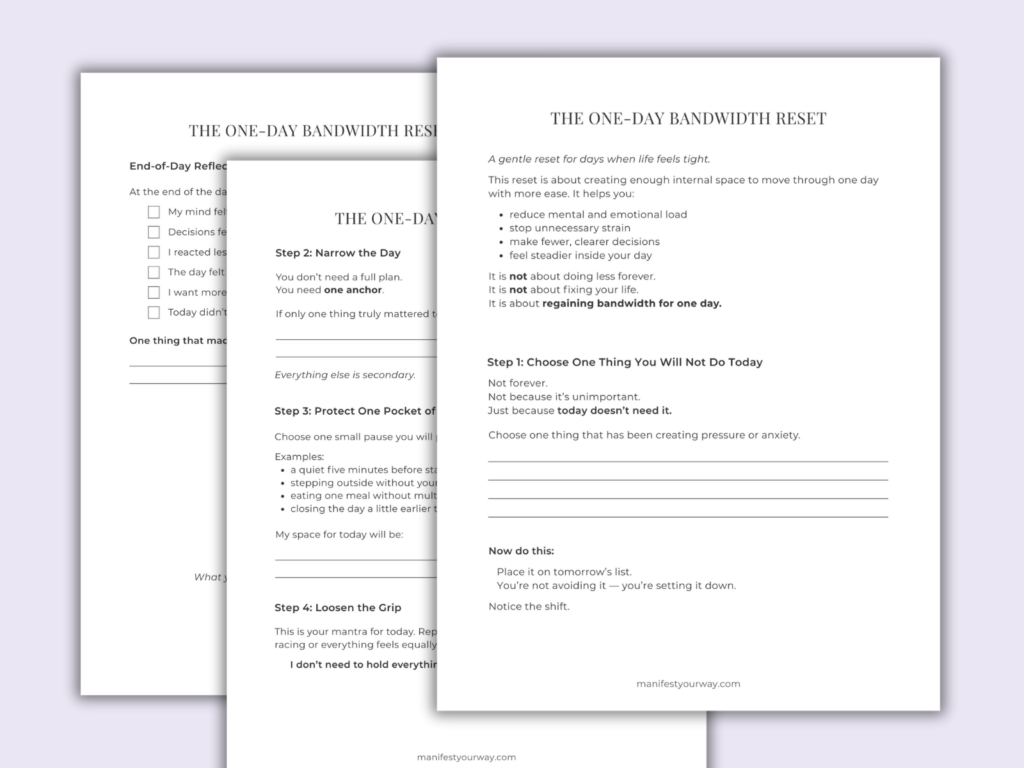
And if you want printable prompts, check-ins, and daily reminders, the Word of the Year Toolkit gives you simple pages to weave your word into your routines all year long.
Why Your Word of the Year Matters in Daily Life
Your word isn’t meant to be a slogan.
It’s a filter — a way to bring intentionality into big choices and small moments.
When used daily, your word helps you:
- stay focused when life gets busy
- drop commitments that drain you
- choose routines that fit your energy
- strengthen habits that support your goals
- set boundaries with more confidence
- shift out of autopilot
- stay grounded during stressful weeks
- remember what matters (and what doesn’t)
Your Word of the Year is not about doing more.
It’s about making decisions with more clarity and less internal noise.
How to Use Your Word of the Year in Everyday Decisions
Below is a simple, practical framework to help you bring your word into daily life — without forcing it or turning it into a chore.
1. Start your morning by reconnecting with your word
A morning check-in shapes your mindset for the day.
You don’t need a long ritual — just 10 quiet seconds.
Ask yourself:
- How do I want this word to guide me today?
- What’s one small choice that reflects this word?
This keeps your word alive, not abstract.
If you want a simple morning prompt, the toolkit includes a one-line “Daily Intentionality” section you can add to your planner.
2. Use your word as a filter for making decisions
When you face a choice — big or small — pause and ask:
“Which option supports the version of me living this word?”
This works for:
- work decisions
- social plans
- commitments
- routines
- self-care
- family boundaries
- how you spend your time
Examples:
- If your word is Simplify → choose the option with fewer moving parts.
- If your word is Steady → choose what keeps your week calm, not chaotic.
- If your word is Build → choose the step that creates progress, even if small.
- If your word is Rest → choose the option that protects your energy.
Your word becomes a compass — simple, steady, reliable.
3. Let your word guide your priorities
Most people feel overwhelmed because everything feels important.
Your Word of the Year helps you cut through the noise.
Ask:
“What would someone whose word is ___ focus on first?”
This helps you:
- choose what matters most today
- drop the guilt around doing less
- stay aligned with your season of life
- break old patterns of overcommitting
The toolkit includes a Weekly Alignment Page where you can sort your priorities based on your word — perfect for planning and grounding.
4. Use your word to shape your routines
Your word isn’t just about decisions — it’s about rhythm.
Use your word to adjust:
- your morning routine
- your nighttime wind-down
- your weekly refresh
- your workspace
- your planning habits
- your movement or wellness routines
Examples:
- Word: Calm → Add a 3-minute breathing pause before starting work.
- Word: Strengthen → Choose one habit to grow consistently.
- Word: Align → Review your goals weekly to stay on track.
- Word: Create → Build a 10-minute creativity block in your day.
Tiny shifts make your word real.
5. Let your word shape how you talk to yourself
Your inner voice sets the tone for your day.
Whenever you feel:
- overwhelmed
- rushed
- discouraged
- scattered
- self-critical
Come back to your word.
Ask:
“What would this word remind me of right now?”
This shift creates emotional steadiness — one of the strongest benefits of having a Word of the Year.
6. Make your word visible in your environment
Your environment influences your behavior more than motivation ever will.
Place your word where you will naturally see it:
- planner cover
- your phone wallpaper
- bathroom mirror
- desk
- laptop sticky note
- kitchen calendar
- notebook
- vision board section
The toolkit comes with printable Word of the Year cards designed for planners, frames, and desktops so your word stays in your daily view.
7. Review your word weekly to stay aligned
A weekly check-in helps you stay on track without pressure.
Ask:
- How did my word guide me this week?
- Where did it feel helpful?
- Where did I drift?
- What’s one shift I want to make next week?
This keeps your word relevant, not forgotten.
Weekly reviews are built directly into the toolkit with simple prompts you can complete in 2–3 minutes.

Real-Life Examples: How Women Use Their Word of the Year
If your word is CLARITY
- Say no to projects that don’t fit your season
- Clear your workspace before starting the day
- Create small pockets of mental space
If your word is ROUTINE
- Set a weekday wake-up time
- Keep the same three morning steps
- Plan your week on Sundays
If your word is STEADY
- Choose fewer commitments
- Take small steps instead of big leaps
- Protect quiet evenings
If your word is GROW
- Learn one new thing each week
- Track your habits
- Stretch your comfort zone gently
Your word becomes a rhythm, not a rule.
Common Mistakes to Avoid
1. Forgetting your word after January
Visibility and repetition keep your word alive.
2. Choosing too many goals at once
Your word should simplify, not overwhelm.
3. Treating your word like a resolution
This isn’t about perfection — it’s about direction.
4. Expecting instant transformation
Your word guides you slowly, steadily, and gently.
Your Word Is a Compass — Not a Checklist
Using your Word of the Year isn’t about doing more.
It’s about choosing with intention.
It’s about making space for what matters.
It’s about building a life that feels aligned with your season.
When used daily, your word becomes:
- grounding
- supportive
- clarifying
- encouraging
- practical
- steady
If you’d like a gentle, guided way to choose your word and weave it into your daily decisions, the Word of the Year Toolkit includes:
- reflection prompts
- clarity questions
- word lists
- decision-map worksheets
- weekly check-ins
- printable cards
- daily reminders
It makes the entire process calm, simple, and meaningful — from choosing your word to living it every day.
Image credit for ManifestYouWay.com: Pixabay.com, Pexels, Canva, and Unsplashed